
Barbie
Barbie Doll Jacuzzi
.
My younger sister was circling the birthday presents like a lioness on the Serengeti stalking the herd.
I knew exactly what she was doing, and it made me giggle. Whatever came out of those packages technically belonged to me, but in her mind she was simply waiting for the moment when my birthday presents became “our” toys.
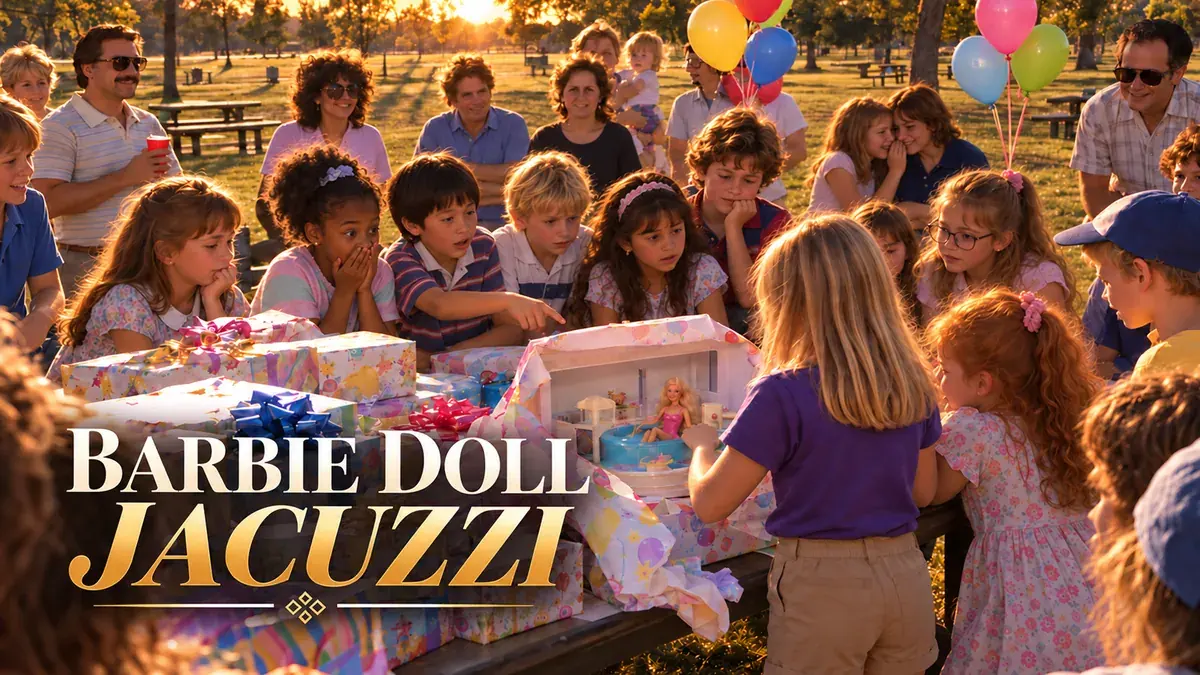
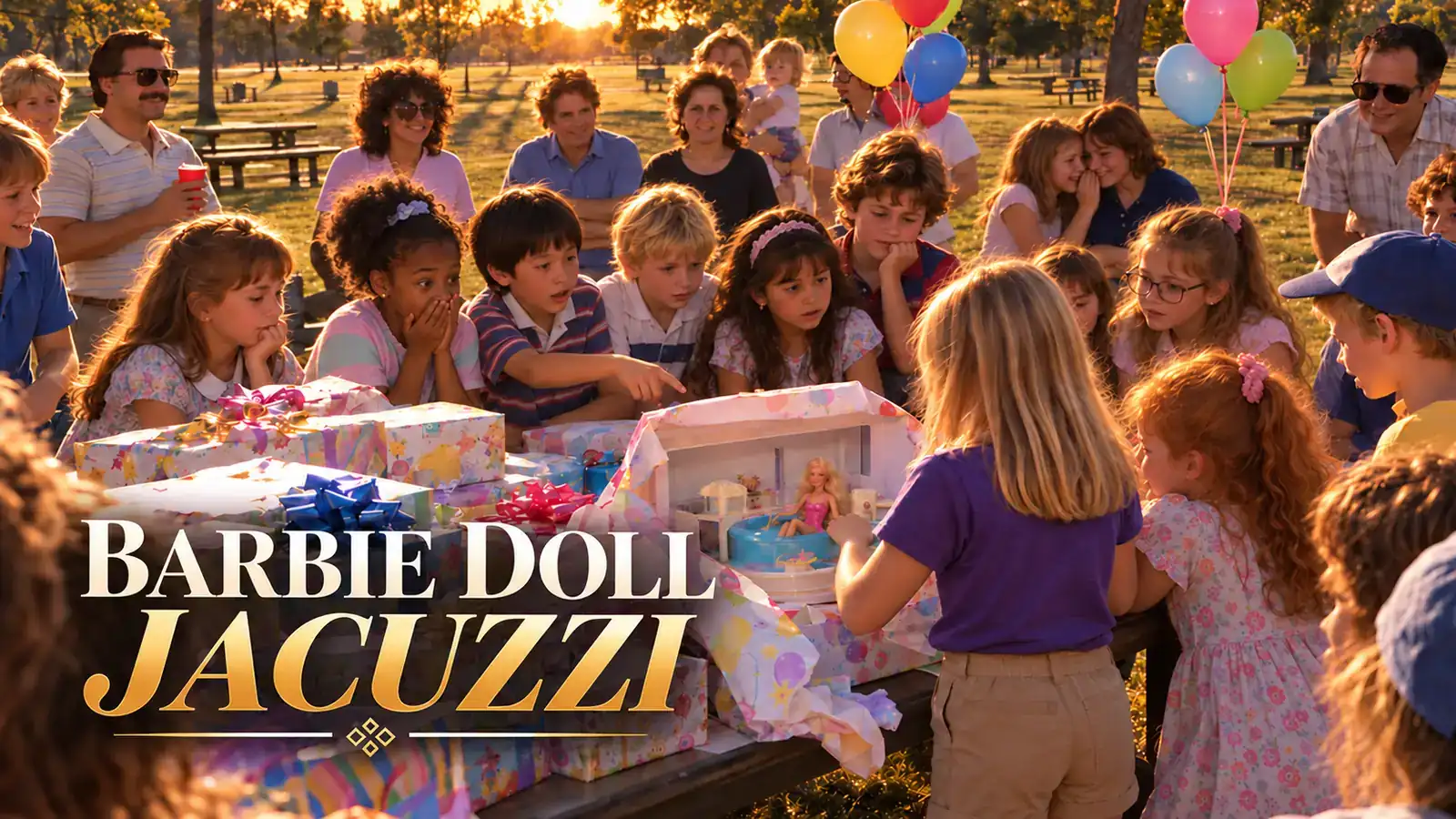
There were probably thirty or forty people at my seventh birthday party, spread across picnic tables in a park. Parents talked while kids ran everywhere, and I was far more interested in playing with my friends than the mountain of presents accumulating on one of the tables.
Eventually, birthday protocol required me to open them.
Then I opened the Barbie doll jacuzzi.
An audible “oooh” rolled across the picnic tables. Girls knew exactly what it was; even the boys and adults leaned toward the commotion.
It had only recently appeared in stores, and nobody in our little universe had one yet. I had seen it before my birthday and wanted it.
Now there it was in my hands, this glorious piece of plastic engineering that promised Barbie and her friends an upgraded social life.
My sister looked ready to climb into the box herself.
I was thrilled.
Then my mother swooped in.
“That’s too much.”
Too much?
My mother moved toward the gift as though something needed to be corrected, while I stared at her in disbelief.
At seven, I couldn’t have explained why my mother’s reaction felt so wrong. I only knew that everything inside me rejected what she was saying.
I loved the jacuzzi. My friend and his family had wanted to give it to me. I was grateful. My sister and our friends were going to play with it. I intended to tear that thing open and put Barbie in the water as soon as humanly possible.
Receiving it felt completely natural to me.
I thought about that Barbie doll jacuzzi again this week after a large box arrived for me at the house.
Inside were several pairs of new flip-flops and some branded merchandise. I have worn and recommended these flip-flops for eleven years because I love them, taking them across countries, through pilgrimages and up mountains until they became part of the visual language of my life.
Amie does impossible things in flip-flops.
People around the world have stared at my feet beneath mountains and asked how I could possibly be wearing flip-flops. They work for me, so I wear the heck out of them.
I was happy to receive the package. My mother commented several times on how fortunate I was to get all this free stuff. I finally told her that I appreciated every bit of it, and I had spent years wearing and promoting those flip-flops everywhere I went.
My mother’s comments about the flip-flops brought back a familiar feeling, and later I found myself thinking about the Barbie doll jacuzzi I’d received for my seventh birthday.
I noticed the way my parents behaved around money from an early age, especially every other Friday when payday and the dreaded word “budget” seemed to arrive together. I didn’t understand household finances yet, but I understood the tension surrounding them.
My mother also had a peculiar habit of putting only five dollars of gas in the car, which meant we were constantly pulling into another station and waiting in another line.
I remember asking her, “Why don’t you just fill the tank?”
We were going to use the gas anyway, and even at seven the inefficiency baffled me.
Five dollars also seemed to hover around an invisible threshold for gifts. The Barbie doll jacuzzi had cost about twenty, an amount significant enough at the time to transform a cardboard box into a minor event.
We had good furniture that children weren’t supposed to use. At friends’ houses, I encountered something even stranger: couches wrapped in clear plastic. My bare legs would stick to the surface while the plastic crinkled beneath me and trapped enough heat to make my skin sweat.
Why buy a comfortable couch and then make it miserable to sit on?
Who says preserving the couch matters more than experiencing it?
Our house had nice towels for guests while we used the old ones, worn thin from years of use and sometimes with a hole or two. Rather than being dried in the dryer, they hung on the clothesline to save on electricity and came back inside stiff and coarse.
After a bath, I would drag one across wet skin and feel the rough cotton scratch rather than absorb.
The soft towels remained tucked away in the linen closet, reserved for guests.
Why did visitors deserve the soft towels while the people who lived in the house dried themselves with the ragged ones every day?
Who says?
I asked that question about nearly everything.
Who says this is how money works?
Who says we have to do it this way?
Who says children aren’t allowed to ask questions?
Who says an authority figure automatically possesses the truth?
Who says the rules I inherited have to become the rules I live by?
I grew up in a family and religion where questioning authority was discouraged and following the rules was expected. My instincts ran in the opposite direction, especially when something I was told violated what I innately knew. My impulse was to question it.
I didn’t understand everything I was witnessing around money, but I could feel the fear and scarcity in the adults around me. Something about it felt deeply wrong, and I resisted making those patterns my own.
That didn’t mean I escaped them.
Children absorb the environments that raise them, including ideas they consciously reject. I have spent years uncovering and deprogramming remnants of patterns I recognized long ago.
I valued my things by using them, which meant I could be hard on them. Barbie dolls were left outside in the sandbox until their hair grew moldy and sometimes an arm went missing, and I still played with them. My sister and our friends played with them too, inside and outside, and keeping everything pristine simply wasn’t important to me.
Things were meant to be experienced; that was how I appreciated them. Sit on the couch, use the good towels, wear the clothes, play with the toys and walk in the flip-flops. Let the things you have participate in your life.
A few years ago, twenty dollars surfaced again.
While teaching myself filmmaking and editing, I produced a thirty-nine-episode “foodie farm-to-table” video series that regularly took me into the fields to harvest. Anyone who has done it knows the labor involved: pulling food from the ground, hauling it back, washing, sorting and preparing it for someone else.
I enjoyed the work and had the time to do it, so I wasn’t standing in a field calculating what my labor was worth. One day, after I had harvested and prepared a beautiful collection of produce for friends and family, a cousin wanted to give me twenty dollars. My mother tried to refuse it for me.
My cousin insisted that she wanted me to have the money, and I happily accepted it.
The amount hardly mattered. My cousin appreciated what I had given her and wanted to reciprocate in a way that felt right. I hadn’t asked for payment, and she wasn’t obligated to give it.
Why should anyone stand between her willingness to give and my willingness to receive?
I’ve noticed how differently we treat giving and receiving. We’re taught that giving is generous and admirable, yet receiving can somehow make us feel selfish, indulgent or uncomfortable, especially when money is involved. Some people become so accustomed to doing everything themselves that accepting generosity feels almost impossible.
“No, you shouldn’t have.”
“That’s too much.”
“You don’t have to pay me.”
“I don’t need anything.”
“Save your money.”
Sometimes those responses are simply gracious. Other times, they’re inherited programming dressed up as humility. And there’s a difference between generosity and giving so much that you exhaust yourself, just as there’s a difference between receiving freely and taking advantage of someone else’s generosity.
Giving can even become a form of control when someone insists on being the provider but has difficulty allowing anyone to give something back.
There’s so much more we can give and receive than money. Our time, knowledge, attention, care, and whatever else we have to offer all have value. And none of it needs to come wrapped in guilt or obligation.
As I write my first book and invite people to support its publication through patronage, I’m encountering some of these same questions in my own life. I’m asking people to contribute to something I know has value, and the experience has shown me how deeply those childhood messages about money, generosity and receiving can haunt us into adulthood.
Even something as ordinary as “who gets the good towels” can reveal where those rules are hiding.
How much opportunity, ease, love or life becomes “too much”?
“That’s too much.”
“We can’t afford that.”
“People like us don’t do that.”
“Save it. You might need it someday.”
“Be grateful for whatever you get.”
A child can hear these instructions often enough to mistake someone else’s programming for their own truth.
Long before I could name any of these patterns, I knew to question what violated something deeper inside me.
Who says?
That instinct may have kept me from swallowing some of those programs whole, although plenty still got inside.
I continue uncovering these patterns through self-inquiry because consciously rejecting a belief doesn’t necessarily free us from its influence. Decades later, I can still recognize childhood programming affecting how I think, feel and behave.
And I’ve discovered that freeing myself from those old patterns isn’t about becoming someone new, but remembering what I knew before someone taught me to distrust it.
Which brings me back to that picnic table.
I can still feel the excitement when the wrapping came away from that Barbie doll jacuzzi and everyone leaned closer, followed almost immediately by my mother moving toward me.
“That’s too much.”
I remember looking at her in disbelief.
Someone had chosen that gift for me and was happy to give it. I was delighted to receive it, and I intended to use it, share it and probably abuse it until Barbie eventually joined the other casualties in the sandbox.
I didn’t have the vocabulary to explain what was happening that afternoon, and I didn’t need it. Even at seven, I knew one thing with absolute certainty.
It wasn’t too much.
Read The Next One: THE DANGEROUS CHIP ON MY SHOULDER →
PLAY IN THE LIVING LAB →
ENJOY THE FULL LIBRARY:
The Dangerous Chip On My Shoulder
Why Do Smart People Stay Stuck?
I Threw Away Every Medal I Ever Earned
Instead Of A Promotion, I Got Fired
I Ran An Experiment With The Universe
People MisJudge High Performers
The Cost Of Other People’s Opinions Of You

Some books are discovered after they’re published.
This one can be experienced while it’s still unfolding.
What began with deep self-inquiry became the Courageous Heart Expedition—and now my first book. Stories, films, photographs, reflections and discoveries are coming together as the work continues to unfold. You’re invited to explore what I’m creating and find your way in.
My Latest…

The Living Lab
Life is a lab. It’s always open.
How much of your life did you actually choose?
Most of us inherit far more than we realize—beliefs, identities, fears, and subconscious programming that control how we see ourselves.
The Living Lab is an ongoing exploration of what we discover when we question what we’ve been taught, challenge the ego, examine our conditioning, and experiment with different ways of being.
Because once you see what you didn’t choose, you get to decide what comes next.
SUPPORT THE WORK
Independent work like this exists because people choose to help make it possible. You can help me keep creating it.